Bhubaneswar, March 26: The Government of Odisha on Thursday announced a new excise policy for 2026–29, introducing higher licence fees, a revised revenue model, and new regulatory measures aimed at strengthening state finances while addressing public health concerns.
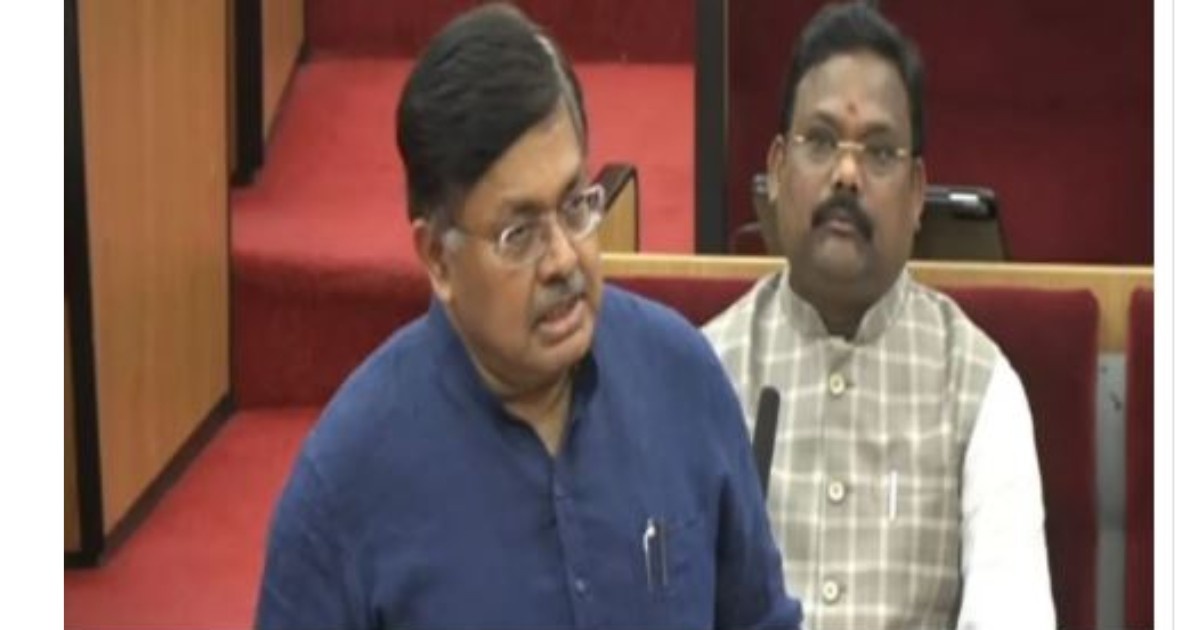
The policy, which will be in effect from April 1, 2026, to March 31, 2029, was presented in the Assembly by Excise Minister Prithviraj Harichandan.
Key Highlights of the New Excise Policy
The newly introduced framework outlines several structural changes in the way liquor trade is regulated and taxed in Odisha.
One of the major changes is the increase in application fees for excise licences by 10 per cent. In addition, licence fees will see annual hikes ranging between 10 and 20 per cent over the next three years.
The government said the revised fee structure is intended to enhance revenue generation while maintaining regulatory oversight of the sector.
Another notable feature is the introduction of a 0.5 per cent de-addiction cess on excise duty. This marks a policy shift acknowledging the social and health impacts of alcohol consumption.
Shift in Revenue Model: From MGQ to MGER
A significant structural reform in the policy is the replacement of the Minimum Guaranteed Quantity (MGQ) system with the Minimum Guaranteed Excise Revenue (MGER) model.
Under the earlier MGQ system, vendors were required to meet fixed sales targets, often leading to concerns that it encouraged higher liquor sales to meet quotas.
The new MGER system instead focuses on ensuring a minimum level of revenue for the government, rather than mandating sales volume targets for vendors.
Officials say this transition is designed to reduce pressure on licence holders to push sales while still protecting the state’s revenue interests.
Regulation of Liquor Outlets
The policy introduces stricter controls on the expansion of liquor outlets across the state.
No new ‘off’ shops—retail outlets selling liquor for off-site consumption—will be permitted during the policy period. Additionally, the government has decided not to allow new ‘on’ shops, such as bars, in rural areas.
However, certain relaxations have been made for the hospitality sector. Hotels rated three-star and above, as well as clubs located in industrial zones, may receive limited permissions under specified conditions.
These measures reflect a calibrated approach aimed at balancing economic activity with regulatory control.
De-Addiction Cess and Public Health Focus
A key feature of the new policy is the introduction of a 0.5 per cent de-addiction cess on excise duty.
The government stated that the revenue generated from this cess will be used to establish and strengthen de-addiction centres across Odisha.
This move signals a growing recognition of alcohol-related health issues and the need for institutional support systems for those affected by addiction.
Public health experts have often called for such targeted interventions, especially in states where alcohol consumption contributes to social and economic challenges.
Cultural and Religious Safeguards
The policy also incorporates provisions aimed at respecting religious and cultural sensitivities.
No excise shops will be allowed near the Shree Jagannath Temple, one of the most significant pilgrimage sites in India.
Additionally, liquor outlets will not be permitted along the Grand Road, locally known as Bada Danda, in Puri—a key route associated with religious processions, including the annual Rath Yatra.
These restrictions are intended to maintain the sanctity of religious spaces and address long-standing public concerns.
Official Statement
Presenting the policy, Excise Minister Prithviraj Harichandan said the government aims to create a balanced framework that strengthens revenue without encouraging excessive consumption.
He noted that the revised policy reflects a shift towards responsible regulation, improved compliance, and social accountability.
The minister also highlighted that the new system would streamline administration and reduce distortions associated with earlier revenue models.
Background and Policy Context
Excise revenue forms a significant portion of state finances across India, including Odisha. Governments periodically revise excise policies to respond to changing economic conditions, consumption patterns, and social priorities.
The previous policy relied on the MGQ system, which had faced criticism for potentially incentivising higher alcohol sales.
The introduction of the MGER model aligns with broader policy trends seen in some states, where the focus is shifting towards revenue assurance without direct pressure on sales volumes.
Additionally, rising awareness about public health impacts has led to the inclusion of measures such as de-addiction funding in excise frameworks.
Public Impact and Industry Response
The new policy is expected to have a mixed impact on different stakeholders.
For licence holders and businesses in the liquor trade, higher fees could increase operational costs. At the same time, the removal of mandatory sales targets may offer some flexibility in managing inventory and sales strategies.
For the general public, the introduction of a de-addiction cess and restrictions near religious sites may be seen as steps towards responsible governance.
In rural areas, the restriction on new ‘on’ shops is likely to limit the expansion of liquor consumption spaces, which has been a concern in several communities.
The hospitality sector, particularly high-end hotels and industrial zone establishments, may benefit from the limited relaxations provided under the policy.
Governance and Revenue Implications
From a fiscal perspective, the policy is aimed at strengthening Odisha’s revenue base.
Higher licence fees, combined with the MGER model, are expected to provide more predictable and stable income for the state government.
At the same time, the emphasis on regulation and compliance could improve transparency in the excise system.
However, the success of the policy will depend on effective implementation, monitoring, and enforcement at the ground level.
Policy Outlook and Implementation
The new excise policy marks a significant shift in Odisha’s approach to regulating the liquor sector. By combining revenue enhancement measures with public health initiatives and cultural safeguards, the government has attempted to balance economic priorities with social responsibility.
As the policy comes into force from April 2026, its effectiveness will depend on how well it is implemented on the ground, particularly in ensuring compliance, managing revenue targets, and expanding de-addiction support systems across the state.
Inputs & Images: Hindusthan Samachar
Edited By: Akshaya Polepalli
Also Read: Uncertainty Over Swapna Barman’s Trinamool Candidature Amid Railway Disciplinary Case